Understanding Ozone
Ozone is a natural gas, a tri-atomic form of oxygen
How It Is Made
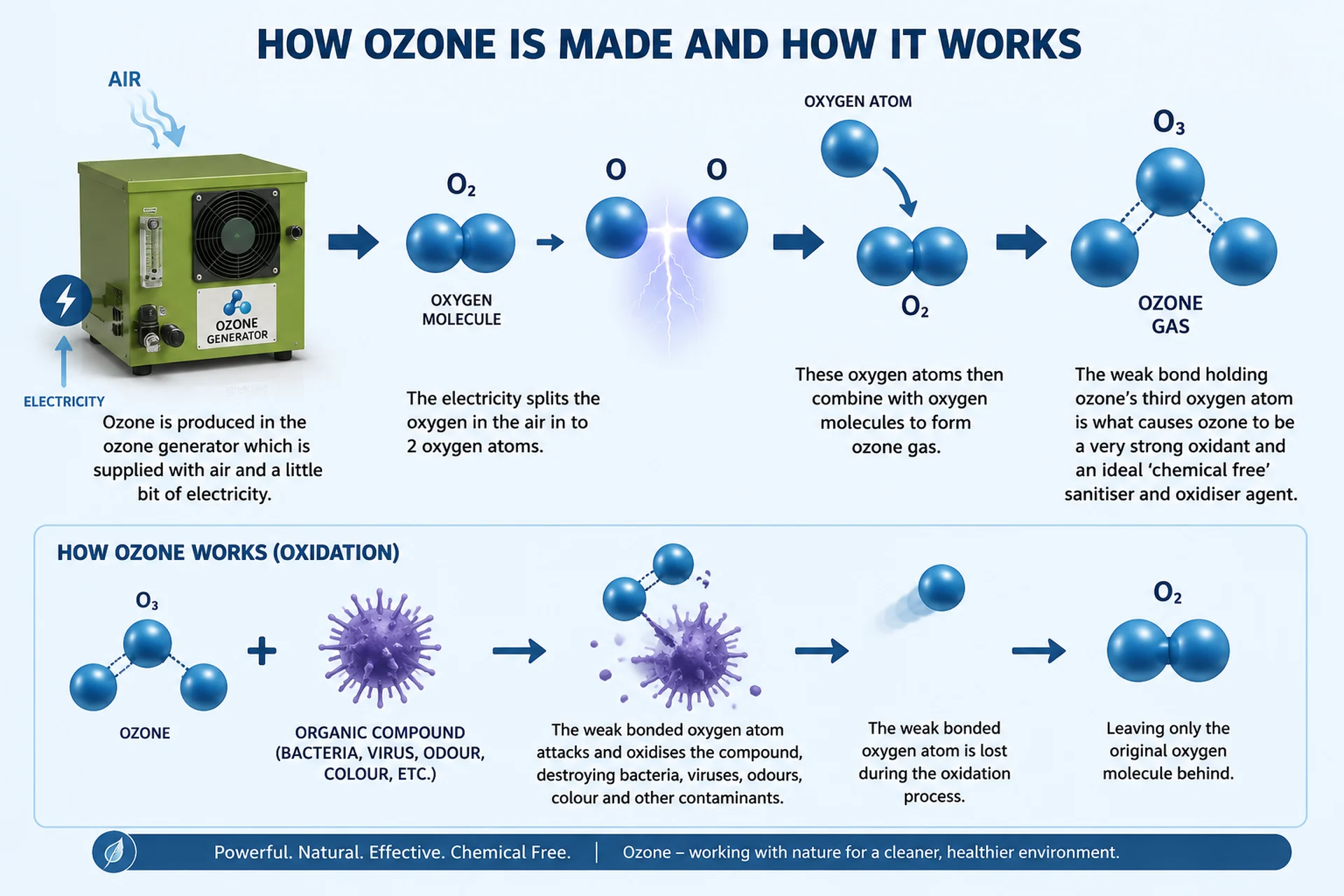
Ozone is produced in the ozone generator which is supplied with air and a little bit of electricity. The electricity splits the oxygen in the air in to 2 oxygen atoms. These oxygen atoms then combine with oxygen molecules to form ozone gas. The weak bond holding ozone's third oxygen atom is what causes ozone to be a very strong oxidant and an ideal 'chemical free' sanitiser and oxidiser agent. When oxidising a compound the weak bonded oxygen atom is lost leaving only the original oxygen molecule behind.
Ozone Approvals
Aqueous ozone is approved as a 100% natural, safe, and effective sanitiser by health authorities around the world.
Ozone Anti-Microbial Efficacy
Ozone, a natural gas, is 3,000 times more powerful than traditional oxidants like chlorine. It has no toxicity issues and produces no disinfection byproducts (DBP's). Micro organisms do not build up a tolerance to ozone.
Relative Sanitising Values
1 ppm ozone equates to 200ppm chlorine.
Ozone Safety (Storage)
Ozone is produced onsite by the ozone generator. Because of its short life ( as it reverts back to oxygen ) ozone can not be supplied or stored in tanks. Therefore safety requirements for storage and handling of dangerous chemicals like chlorine do not apply.
Ozone Safety (In Water)
Ozone has been allowed and accepted for some time in food processing in Japan, Australia, New Zealand, and other countries around the world. Ozone was confirmed as GRAS ( Generally Recognised as Safe ) by the FDA in 1998 and recently as a safe and sustainable sanitiser for food meant for human consumption.
Ozone Safety (In Air)
Ozone gas in the work place is subject to local Government regulations. Typically Health & Safety regulations require that ozone levels in the work place remain below 0.1 ppm.